
Overview
"Crow and Molasses" explores the racial integration of Atlanta public schools in the voices of participants. With an emphasis on 1961, topics include the state government's resistance to the Brown vs. Board of Education decision, the Sibley Commission, the experiences of the "Atlanta Nine," and the strategies Atlanta politicians used to avoid the negative headlines that plagued other cities' school desegregation efforts. The presentation closes with a discussion of white flight and the "Atlanta Compromise of 1973," which halted busing as a method of integration. "Crow and Molasses" is the third installment in Southern Spaces’s Trouble the Land series as well as the third of the series' five presentations featuring Atlanta.
About the Series
Trouble the Land: A Personal History of the Civil Rights Movement in Five Southern Cities is a series of multi-media presentations exploring the local character of the civil rights movement through the voices of those who lived it. The series, which covers Atlanta, GA, Montgomery, AL, Columbia, SC, Jackson, MS, and Little Rock, AR, is a transformation of the 1997 Peabody Award-winning audio documentary Will the Circle Be Unbroken? produced by the Southern Regional Council (SRC) and distributed by Public Radio International (PRI). Trouble the Land pairs Will the Circle Be Unbroken's audio (without popular music excerpts) with an enhanced transcript featuring curated photographs, video, archival images, original maps, informational text links, and recommended resources. Through Trouble the Land, Southern Spaces seeks to stimulate critical discussion about the civil rights movement and the process of societal transformation among scholars, activists, educators, students, and the general public.
Click for audio
Crow and Molasses
Vernon Jordan: You have to remember that when Atlanta desegregated its schools, you're only talking about nine students. And there was as much to-do about nine students as there should have been about 100,000 students. So it was a gradualist process. But even that gradualist process had a traumatizing effect on white people because what it represented for them was the beginning of the end.
(0:28) Vertamae Smart-Grosvenor (Narrator): Amid the racial tensions of the post-war South, Atlanta's white leaders promoted their hometown as, "a city too busy to hate." Yet, Atlanta, like many other southern cities, resisted school desegregation for years after the historic 1954 Brown decision. In both Black and white communities, reaction to the Brown decision was swift and dramatic.

NAACP leader Jondelle Johnson:
Jondelle Johnson: It was like I imagine when they had the Emancipation Proclamation and the slaves was free. We've won that victory. That is over and from now on we'll have integrated schools and equal education.
(1:11) Narrator: State Senator John Greer:
Speech by John Greer: Now I'm not a moderate on segregation. I'm a segregationist period. All of us in the state, 99 percent of the people are, but we must face reality and that is that we're under federal court order.
(1:27) Narrator: The Supreme Court decision called for school desegregation "with all deliberate speed."
Federal Judge Elbert Tuttle:
Elbert Tuttle: I don't think it would have made much difference if the Supreme Court said all school districts in the South shall be desegregated no later than the fall term of 1954. I don't think they would have moved any faster. They'd have said you make us do it. And that's what they did. Everyone of them said, "You make us do it."
(1:55) Narrator: The Georgia state legislature denounced the Brown decision and quickly passed a barrage of laws designed to challenge federal authority and fight school integration, no matter what the consequences.
Muriel Lokey: The major response in Georgia took place in the legislature where there was developed the policy of massive resistance. This was designed to prevent integration by closing the public schools as a last resort and shifting to a private system. And by 1958, most of the white public seemed to believe their elected officials, who had been telling them that regardless of what the court said, Georgia schools would never have to be integrated.


(2:36) Narrator: Former Governor Ernest Vandiver:
Speech by Ernest Vandiver: There is no real sentiment in Georgia for integrating the classrooms of our schools and our colleges, and we are the targets, my friends, of destructive forces beyond our borders and the evil effects of which must be neutralized by Georgians acting in concert for their best interest. (Loud applause).
(3:00) Narrator: That same year, through the NAACP Legal Defense Fund, Black parents in Atlanta forced the action by filing a suit challenging the segregated school system. When federal judge Frank Hooper ruled that Atlanta's schools must desegregate by fall 1960, the scene was set for a showdown.
College professor John Griffin:
John Griffin: Georgia had a law that called for the closing down of the whole system if a child were admitted to any one school within the system.1Audio is unavailable for this comment.
(3:28) Narrator: So if just one Black student entered a white school, all the city's schools would be closed—an option many whites preferred. Others saw the matter differently.
Nan Pendergrast: We were so horrified by what had happened in Little Rock—so determined that that not happen in Atlanta.
Of course, it was a tremendous number of people, well-meaning people, who said, "You cannot legislate morality." Well, if we hadn't legislated morality, I don't know if we ever would have gotten any.
(3:57) Narrator: As the crisis deepened during the winter of '58, a group of liberal white women founded a new organization. HOPE—Help Our Public Education was formed to keep the public schools open. HOPE leaders, Muriel Lokey and Nan Pendergrast explain the group's pragmatic approach:

Muriel Lokey: From the beginning we felt that our best strategy would be to stress the one issue of preserving public schools. And to maintain a neutral position in arguments over integration. We chose not to be a biracial organization but rather to be white people persuading white people. It was seen as a tactical necessity.
Nan Pendergrast: My particular job was talking to the Kiwanis and the Rotarians and the Civitans who at that time would never have allowed a Black person in their door and probably not allowed anybody who was known to consort with those people. We had seven children who were in the public schools for at least some part of their career.
And I also was very fortunate in having a grandmother who had been born in Atlanta during the battle of Atlanta and born in the basement because the Yankees were occupying the rest of the house. I exhumed the woman with every speech, because it was terribly important to let people know that you lived here—that you understood the situation.
(5:23) Narrator: HOPE adopted many creative tactics to demonstrate white support for keeping the public schools open.
Frances Pauley: My name is Frances Pauley. I remember once we had a telegram that we blew up until it was about six feet long, you know, about like so and delivered the telegram to the governor with some real pretty sweet looking ladies carrying it.
Muriel Lokey: By the end of '59 we had 20,000 names on a statewide mailing list. And when the legislature convened in January of 1960, the Athens chapter sent an open schools telegram to the governor with 747 signatures and a few days later HOPE presented a statewide edition with 10,000 names on it. We had pasted them all together and made a big roll.

Frances Pauley: We were up on the third floor in the Capitol. So over the banisters of the rotunda, we dropped the petition down and it goes down, fell down to the first floor. And of course we had all the press and everything taking pictures of it.
(6:22) Narrator: With NAACP lawsuits, new federal court decisions, and pressure from HOPE affirming the necessity for school desegregation, some Georgia politicians began to back away from their public rhetoric.
In early 1960, the legislature appointed a commission to conduct state-wide hearings on the schools. It was headed by prominent Atlanta attorney, John Sibley.
Former governor Ernest Vandiver:
Ernest Vandiver: John Sibley went into each congressional district and had public hearings and gave everybody that wanted to testify a chance. And so if they were opposed to it, they had a chance to say they were opposed to it.
John Sibley: Do you think it's better to have separate schools for the colored people and the white people or do you prefer having mixed schools?
Unidentified Witness: Well, I tell you, I'm speaking for the group. Cause in my church and, in the ah PTA, we prefer our school remain unmixed.
Celestine Sibley: I attended one, one here. I remember Mr. John Sibley was gentle and courteous and encouraged everybody to say what they thought. Some people said some outrageous things. But mostly it was constructive.
Ernest Vandiver: It quieted the situation. It gave the people of Georgia knowledge as to what their options were. You'd have no schools or had integrated schools.
James Mackay: And the majority of people that appeared before that hearing said keep them open and segregated.

(8:05) Narrator: The Sibley Commission's final report never advocated desegregation per se. It favored plans to enable white children to transfer out of any school where a Black child had enrolled.
Vernon Jordan: But the Sibley Commission was not in charge of the issue. We were in charge of the issue. And in effect Black people were calling the shots, and the white community was having to respond. We had the initiative and it was our call.
(8:31) Narrator: Continuing to apply pressure, Atlanta lawyer Donald Hollowell and other NAACP attorneys targeted the state's best-known public school: the University of Georgia. Under the state's massive resistance laws, like any other school, the University would be closed down if Black students were admitted. The table was set.
Frances Pauley: I think that the NAACP was terribly smart when they picked the University of Georgia to make the first case. Because if it was one thing that was close to the hearts of the General Assembly, was the University of Georgia because too many of them were graduates.
(9:09) Narrator: Former U.S. Congressman James Mackay:
James Mackay: Donald Hollowell understood Georgia and that football is God! Donald Hollowell said, we gonna test this allegiance to God Almighty. And so the crunch ain't coming in Atlanta. And immediately they said, "Well, you know, we will be disqualified to be in the football conference." Well, I mean, you know, you can't interrupt the football schedule!

(9:41) Narrator: In January 1961, when federal judge W. A. Bootle ordered two Black Atlantans, Charlayne Hunter and Hamilton Holmes, admitted to the University of Georgia—a riot broke out on campus. The school was closed down. Holmes and Hunter were suspended. Then judge Elbert Tuttle ordered the university to re-open with the two students admitted. Governor Ernest Vandiver, going back on his campaign promise, reopened the university.
Ernest Vandiver: I spent a lot of time – prayerful time – on my knees during that period of history, seeking guidance. I could think of nothing worse than a million children out of school and on the streets and what would happen if you closed the schools. I was caught on the horns of a dilemma. Finally, I made a decision and recommended to the legislature that all of the segregation laws be wiped from the books.
Frances Pauley: Well, I think it turned the tides as far as open schools, and "Little Ernie" as we used to call him, Ernest Vandiver, was the governor. He had said never, never, no never, and so then he got up and said that the schools would open, and so everybody says all right, now go home and send him a telegram, and I said I cannot send him a telegram! Said if he's got to eat crow, at least him have a little molasses on it.
(11:16) Narrator: With the University of Georgia successfully desegregated, the focus shifted back to the Atlanta public schools. The city school officials took a "go slow" position, calling for only token integration in the upper grades alone. But Black community members maintained the pressure, recruiting students to apply for transfer to white schools.
Student Martha Holmes:
Martha Holmes-Jackson: Mr. Jesse Hill with the Atlanta Life Insurance Company was instrumental in encouraging us to go down to get the applications.
Jesse Hill: Then we went to the homes and went to the PTA meetings, and we solicited people, and some of them just came forward and wanted to do something for history.
Martha Holmes-Jackson: We had lived through the sit-ins with the college students. When I got the opportunity to do this in high school, then we jumped right on it.
Lonnie King: The students who went to the segregated schools did not come from Atlanta's finest in the Black community. They were regular blue-collar people's children.

Jesse Hill: I don't think that any one of the parents were college graduates, and they were really low income, low middle income families. Hard working, but very intelligent, very determined parents. Many of them indirectly received some type of economic retaliation. But of course we were able to support them, even to get employment for people who were threatened.
Judy Tillman Hiwett: Someone came to our home from the NAACP, and I remember my mother and grandmother whispering, "No, we don't want to subject her to that. We don't want her to go." She said that someone came to the house and asked if I would want to be one of those nine, and my mother said that she was fearing and especially my being the only child, she didn't know what would happen.
Narrator: Despite the violence that had accompanied school desegregation in Little Rock and elsewhere, the first students were assured things would be different in Atlanta.
Radio announcement by William B. Hartsfield: I'm William B. Hartsfield, mayor of Atlanta. Soon now Atlanta's public schools will be desegregated according to federal law. I'm sure we'll all meet this change with the order and dignity that Atlantans have been famous for and show the whole world Atlanta is truly a great city. Let's not let Atlanta down.
(13:47) Narrator: Martha Holmes was among the students who applied to transfer to a white school.
Martha Holmes-Jackson: The message was that we won't let the same thing happen here. We could do it better in a sense. I guess they couldn't afford to let something like that happen in Atlanta.
(14:01) Narrator: 133 Black students applied for transfer. Ten were accepted.
Martha Holmes-Jackson: We kind of thought they put fewer of us in the schools, hoping that we would be discouraged and want to go back. And they'd say, "Well, you see we tried, and they couldn't stay, so what else can you do?"
Nan Pendergrast: I awakened that morning with my heart in my throat wondering what would happen and worrying about, of course, the transfer students themselves.
(14:32) Narrator: On August 31st, 1961, Atlanta's public schools would finally admit nine Black students.
Radio Announcer: Nine Negro students are to attend four previously all-white high schools. The schools involved are Grady, Brown, Murphy, and Northside High.


(14:52) Narrator: With an eye to the city's image, Mayor William Hartsfield and others carefully choreographed the event.
Journalist Celestine Sibley:
Celestine Sibley: In other cities there were protests and marching. Here, Mr. Hartsfield set up a pressroom in City Hall for the out-of-town press, equipped them with desks, and typewriters, and food, merchants brought in food, Coca Cola company brought in Cokes. They were connected by radio with the campuses of these schools, and then given a bus trip to visit the schools. The out-of-town press were given a party that night. It was altogether different from what was going on in some cities. It was a great public relations coup.
Radio Announcer: Everything was beautifully quiet and just a regular old school day. WSB Radio News.

Leslie Dunbar: In looking back on it, was sort of incredible. We had all of that attention to put how many people was it, half a dozen kids in school. But the city felt so proud of itself when it was all over.
George Goodwin: You can't imagine the pride in this town when Jack Kennedy started his news conference that August afternoon.
Speech by John F. Kennedy: I strongly urge the officials and citizens of all communities which face this difficult transition in the coming weeks and months to look closely at what Atlanta has done and to meet their responsibilities as have the officials and citizens of Atlanta and Georgia with courage, tolerance, and above all, respect for the law.
George Goodwin: Even now, I can't talk about it without getting emotional. It just set this place on fire!
Muriel Lokey: I don't want to leave the impression that everything was just beautiful. Betty Vinson was there at City Hall as a press representative for OASIS, and she still recalls now, with pain, the shock of hearing on a loudspeaker a voice coming from one of the schools, from one of the police cars, saying, "Everything is normal. No one is eating with them. No one is speaking to them. I repeat: everything is normal. No one is eating with them and no one is speaking with them."
Martha Holmes-Jackson: The very first day we attended school, we went to lunch. And it was pretty much like a table had already been reserved for us. Nobody else was sitting there. They pretty soon came to be comfortable enough with us being around that they could sit and eat their lunch and not have to run away from us.
(17:47) Narrator: For those first students who desegregated the Atlanta public schools, the experience was often unpleasant, lonely, and confusing—feelings that would last through graduation.

Martha Holmes-Jackson: Graduation. Huh! It wasn't terribly exciting for me. They had a class outing at a place that did not allow Blacks to come in and of course, the principal and other people assured me that I had every right to attend and if I wanted to, they would make other arrangements. But at the same time suddenly they were telling me you know you really don't want to spoil this for all of these students. And I guess I didn't. It wasn't that important to me. I did attend the prom, but I didn't stay very long. My escort and I hung around for a little while. But then they were playing music that we didn't dance to.
I do remember just being sick of them. I said "I've had enough of it. I've done what I set out to do." And I think my sentiment might have been let somebody else do their part now.
(19:04) Narrator: Throughout the 1960's, Atlanta school officials continued to stall desegregation. They placed the burden on the shoulders of Black students and their families. In the Black community they said it was easier to get into Harvard or Yale than to transfer to a majority white school.
Attorney Leroy Johnson:
Leroy Johnson: The Board of Education as it was then constituted never adopted the theory of equality of education. So at every opportunity they resisted it.
Lonnie King: You see you have to understand that when these white men were in office, no one had to pressure them. I mean they believed in what they were talking about. And they believed that the races should be segregated. They did not believe that Black kids ought to sit in schools with white kids.
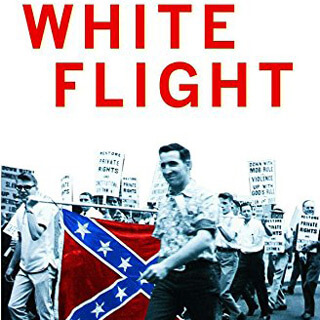
(19:54) Narrator: For some years desegregation continued on a grade-by-grade basis. No white students were ever required to change schools. The city rejected any busing plan whatsoever until the early 1970s. By that time, massive white flight from the city of Atlanta and its public schools had made city-wide integration nearly impossible.

Leroy Johnson: That same power structure never took a stand in education, that same group that sought to protect the business never took a stand to protect the schools. Instead, they took their students, their children out and sent them to some other school where they could afford to send them.
Lonnie King: Well, whites were moving out of Atlanta at a rapid rate to escape school desegregation.
Jondelle Johnson: They went to the suburbs.
Lonnie King: So these folks are all over the suburbs now. Still coming in Atlanta working, but their kids going to school in their neighborhoods out there. Mableton, Palmetto, Austell.
At that time, I had become president of the NAACP, this was in '71, I said well I'd be interested in entertaining how we can drop this lawsuit, but there has to be a price for the dropping of the lawsuit.
Narrator: In the time-honored Atlanta fashion, Black and white leaders met behind the scenes in early 1973 to hammer out an agreement on the schools. Julian Bond, a state senator at the time, reflects back on the deal known to some as, "The second Atlanta compromise."
Julian Bond: The community settled for Black control of the school system in exchange for an integrated school system. At the time it had a lot of attractiveness to it, but in hindsight it was an awful mistake.
Black control of the school system was inevitable; population dictated that! Surrendering integration of the public schools here and elsewhere in the country has been an awful mistake. You only have to look at the state of inner-city education to see how much apartheid there is in American life and in American education today. It's epidemic.
Eliza Paschal: We keep putting off the issue really, which to me is whether or not the color of your skin really makes any difference to people as individuals in Atlanta. Schools are not really integrated, and we have never had a discussion on what it would mean to integrate the schools. 
About the Creators
The audio documentary series Will the Circle Be Unbroken? was produced by the Southern Regional Council (SRC) and distributed by Public Radio International (PRI). George King served as producer, Steve Suitts as executive producer, and Worth Long and Randall Williams were senior associate producers. The series was narrated by Vertamae Smart-Grosvenor. The episode "Crow and Molasses" was written by George King, Cliff Kuhn, and Steve Suitts with Vertamae Smart-Grosvenor.
Trouble the Land was developed from the Will the Circle Be Unbroken? radio programs by the staff of Southern Spaces and the Emory Center for Digital Scholarship. Ella Myer serves as series editor. Sound engineering and video editing by Steve Bransford. Additional editing by Allen Tullos, Angelica Johnson, Ayoung Kim, Nyaradzai Mahachi, and Jessica Halsey. Inquiries about the series can be directed to seditor@emory.edu.
Banner image: Students Willie Jean Black, Arthur Simmons, and Donita Gaines leave Northside High School on the second day of its racial integration, Atlanta, Georgia, August 31, 1961. Photograph by Charles Pugh and the Atlanta Journal-Constitution. Courtesy of AP Photos.
Recommended Resources
Archival Materials
To access a digitized selection of the unedited oral histories that the Southern Regional Council conducted and used as the foundation for the Atlanta episodes of Will the Circle Be Unbroken? visit Emory University's Aviary Digital Archive.
Will the Circle Be Unbroken's physical program files and sound recordings can be found in the Stuart A. Rose Manuscript, Archives, and Rare Book Library at Emory University.
Brown-Nagin, Tomiko. Courage to Dissent: Atlanta and the Long History of the Civil Rights Movement. Oxford University Press, 2012.
Grady-Willis, Winston A. Challenging U.S. Apartheid: Atlanta and Black Struggles for Human Rights, 1960-1977. Duke University Press, 2006.
Lefever, Harry G., and Michael C. Page. Sacred Places: A Guide to the Civil Rights Sites in Atlanta, Georgia. Illustrated edition. Macon, GA: Mercer University Press, 2008.
Sims-Alvarado, Karcheik. Atlanta and the Civil Rights Movement: 1944-1968. Charleston, SC: Arcadia Publishing, 2017.
Tuck, Stephen G. N. Beyond Atlanta: The Struggle for Racial Equality in Georgia, 1940-1980. University of Georgia Press, 2003.
Web
Atlanta History Center. “The Color-Line: Problem of the Centuries.” Accessed March 28, 2025. https://www.atlantahistorycenter.com/exhibitions/the-color-line-the-problem-of-the-centuries/.
Atlanta University Center. “Seeking to Tell a Story: Political Action from Slavery to Civil Rights.” Accessed September 23, 2025. https://digitalexhibits.auctr.edu/exhibits/show/seekingtotell/overview.
Myrick-Harris, Clarissa. “Atlanta in the Civil Rights Movement, 1940-1970.” Perspectives on History. December 1, 2006. https://www.historians.org/perspectives-article/atlanta-in-the-civil-rights-movement-1940-1970/.
Similar Publications
| 1. | Audio is unavailable for this comment. |
|---|